
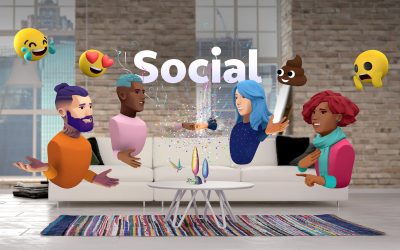
The use of avatars in augmented reality is increasingly prevalent across various platforms. This technology provides an immersive experience, allowing individuals to communicate more expressively and personalize their interactions within digital environments. Consequently, avatars are gaining popularity in gaming, social media, and communication applications like WhatsApp, enabling users to socialize and play in real-time virtual environments.
What exactly are augmented reality avatars, and what other applications do they have?
What are augmented reality avatars and how are they created?
An augmented reality avatar is a digital representation of a user or character overlaid onto the real world through augmented reality technology. This virtual identity can interact with the physical environment in real-time.
These avatars are generated using computer models, typically based on real-world models, and then integrated into environments, enhancing the sense of interaction.
What roles do augmented reality avatars play?
Augmented reality avatars are transforming how we communicate, learn, shop, and play in the digital world. Their integration with artificial intelligence adds an additional layer of versatility and adaptability.
Furthermore, AI-generated avatars can simulate natural human conversations and behaviors, adapting their personality and responses based on interaction and context. This is particularly useful in virtual assistants, games, and customer service applications. Increasingly, companies are focusing on developing solutions that combine AI and AR with two types of integrations:
- AI-powered Avatars using Chat GPT: These leverage the OpenAI tool to imbue them with intelligence, enabling them to interact more naturally with users. They can recognize voice or text input and possess broad knowledge across various subjects.
- AI-based Avatars with Knowledge-Acquired Insights: This integration adapts the AR avatar's intelligence to specific domains. They become specialized digital assistants focused on areas such as wine, beauty, or culture.
Creation and Customization
There are various options for creating avatars, each with its own characteristics and limitations based on project needs.
Online Platforms
Companies like ‘Union Avatars’ offer a quick and straightforward option for creating realistic avatars. Simply provide a selfie, and you’ll receive your 3D character in real-time, suitable for gaming, virtual reality, and web AR applications.
These platforms enable visual customization (selecting facial features, skin tone, eye color, hairstyles, and more), clothing and accessories, and stylistic choices (realistic, futuristic, and beyond).
They utilize algorithms to analyze the user's image and create a digital representation with an intuitive interface, facilitating navigation and personalization through simple clicks.
After creating an avatar, users can share it on social media or use it as a profile picture.
Through 3D Modeling and 3D Animation:
Advanced avatar creation involves generating three-dimensional digital representations of people or objects with realistic movement, typically through 3D modeling and animation techniques. This technology is utilized across diverse sectors including video games, film production, immersive professional projects, and advertising.
Avatar-Enabled Events
Virtual avatars are increasingly prevalent in daily life, particularly within the context of events such as conferences and metaverse gatherings. Their significance is growing, especially in the organization of these virtual spaces.
For example, at the recent Mobile World Congress, augmented reality (AR) gained prominence through the use of avatars. This technology enhanced the attendee experience and demonstrated the potential of AR within the mobile industry.
AR avatars enabled attendees to create virtual representations of themselves during the event, allowing for interactive engagement with both the physical environment and digital objects in a compelling manner.
Within the business sector, AR avatars facilitate more immersive remote communication, enabling professionals to participate in virtual meetings and collaborate within digital environments with a heightened sense of realism.
They also hold significant importance in education, where AR avatars enable the creation of engaging learning experiences, allowing students to interact with 3D models and educational objects in a highly interactive way.
In summary, the increasing adoption of avatars in augmented reality reflects the continuous advancement of this technology and its capacity to transform how we interact with the digital and physical worlds, unlocking numerous possibilities across various industries. The convergence of AR and avatars promises a revolution in how we live, work, and learn.
Success Case: Mikecrack Virtual Avatar
One of Isostopy's key projects focused on the development of virtual avatars with significant impact has been the creation of Mikecrack's avatar.
Mikecrack is one of the most popular YouTube channels in Spain, featuring videos of games such as Minecraft, Roblox, and Fall Guys, alongside musical parodies and gameplay narratives with a humorous tone.
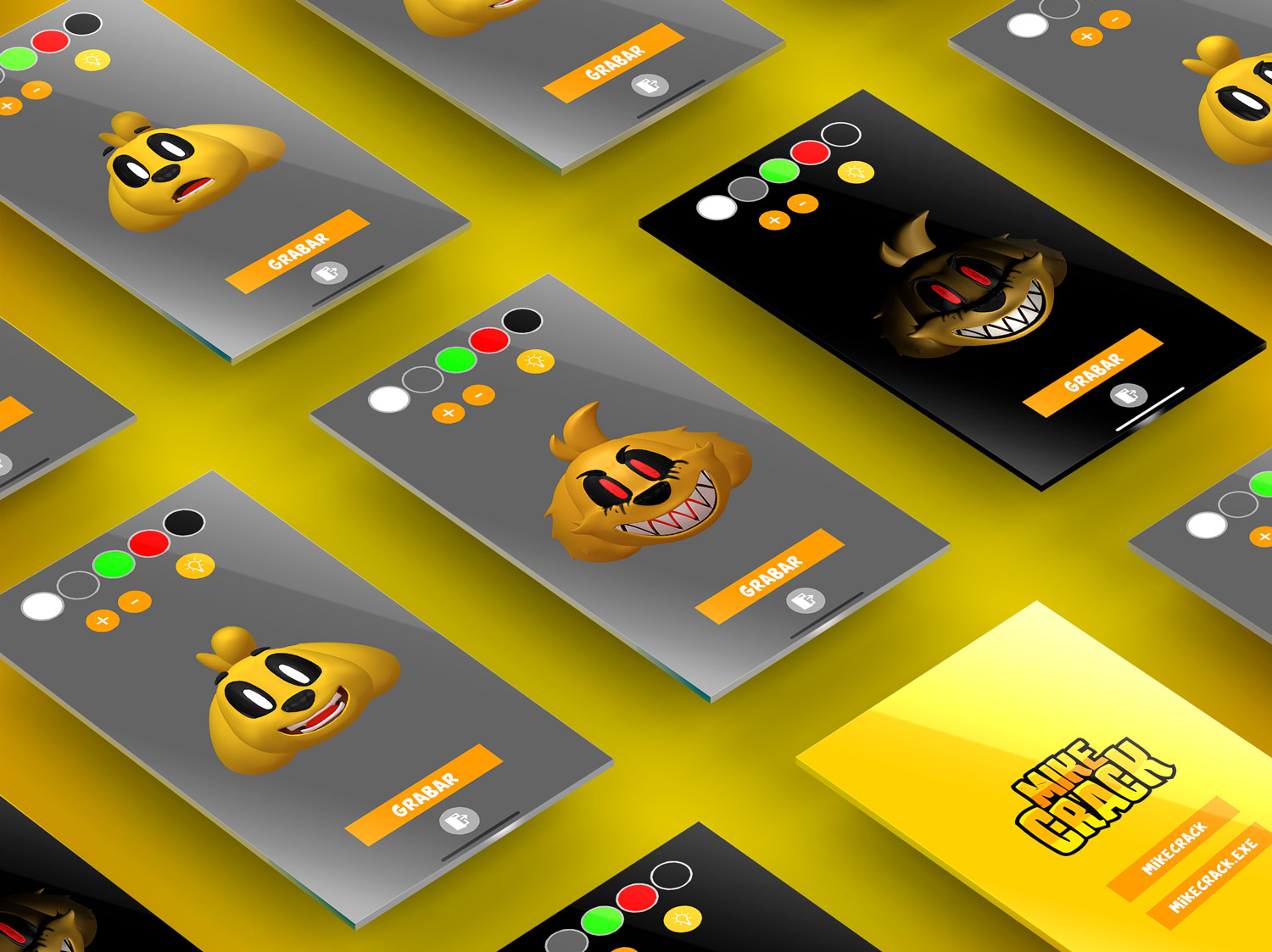
To improve communication with his followers, Isostopy developed a 3D avatar of Mikecrack and his antagonist, Mike.exe, similar to Animojis. These characters are controlled via an iOS app that utilizes the iPhone's facial recognition sensors.
The characters are controlled through an iOS application leveraging the iPhone's facial recognition sensors.
The project originated with 3D modeling of the characters, starting from their 2D image.
To enhance realism and naturalness, over 50 unique expressions were created for each character, subsequently unified within the app. Furthermore, diverse backgrounds and lighting effects were incorporated to achieve a fully immersive effect.
The app includes additional features to enhance the user experience, allowing for direct recording from the app or connection to a computer for live recording.
Further Information: https://isostopy.com/project/avatar-virtual-mike-crack/