

Two terms – Virtual Reality (VR) and Augmented Reality (AR) – have been gaining significant traction for several years. These technologies are reshaping our perception of reality and our interaction with technology, but do we truly understand their meaning, technical distinctions, and diverse applications? This article provides a detailed examination of these differences and their impact on our daily lives.
What is Augmented Reality?
This technology combines digital elements with the physical world to create an artificial environment. For example, you can view overlaid sports statistics on a television screen while watching a football game. Advanced and interactive experiences with this technology can be facilitated using dedicated devices, such as the Apple Pro Vision (expected to be available soon), although access to AR content is also possible through the camera of a smartphone.
What is Virtual Reality?
Conversely, virtual reality (VR) allows users to be fully immersed in artificially created environments designed to provide immersive sensory experiences. This means users can enter fictional worlds without perceiving what is happening in the real world. Video games and training applications for hazardous work environments are examples of VR applications.
What are the Key Differences?
1. The Environment:
Augmented Reality does not isolate the user from their physical environment, allowing them to interact with the surrounding space while virtual elements are superimposed.
In contrast, when using Virtual Reality, the user is completely immersed in a computer-generated three-dimensional visual and spatial environment, leading to a complete sense of isolation.
2. Immersion:
Augmented Reality allows users to discern the real world while incorporating digital elements. Conversely, Virtual Reality introduces the user to a virtual world, completely blocking their perception and achieving a full sense of immersion.
3. Utility:
Augmented Reality is employed in a wide range of applications, from mobile games to everyday assistance and informational content. Virtual Reality finds greater usability in entertainment apps, simulations, training, video games, and virtual training.
4. Hardware:
Accessing Virtual Reality typically requires the use of VR headsets and controllers for interaction. Augmented Reality, however, can be experienced with more common devices, such as smartphones or tablets, equipped with cameras and processing capabilities.
Ultimately, these two concepts, often mistakenly perceived as a single technology, are fundamentally opposed. The key distinction is that Virtual Reality immerses you in a digital world, isolating you from the real world, while Augmented Reality incorporates digital content into your existing real-world environment, allowing you to interact with both simultaneously.
To clarify, the following examples of Augmented Reality (AR) and Virtual Reality (VR) applications developed by Isostopy are presented:
Augmented Reality (AR) Examples
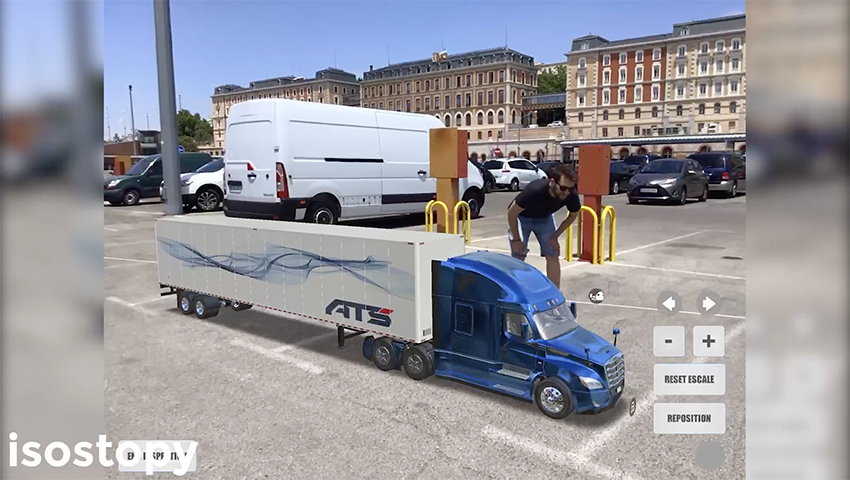
- Pre-Trip Inspection: A training application utilizing immersive Virtual Reality designed for professional drivers, compliant with U.S. regulations. Developed for Advanced Training Systems LLC (ATS), this tool provides a rapid and accurate training system.
- Mares ForeverA game focused on sustainable fishing as part of the Marine Stewardship Council (MSC) Spain and Supermarkets Lidl campaign. The objective is to promote responsible seafood consumption and raise awareness regarding the need to protect marine resources through an interactive experience.
Virtual Reality (VR) Examples
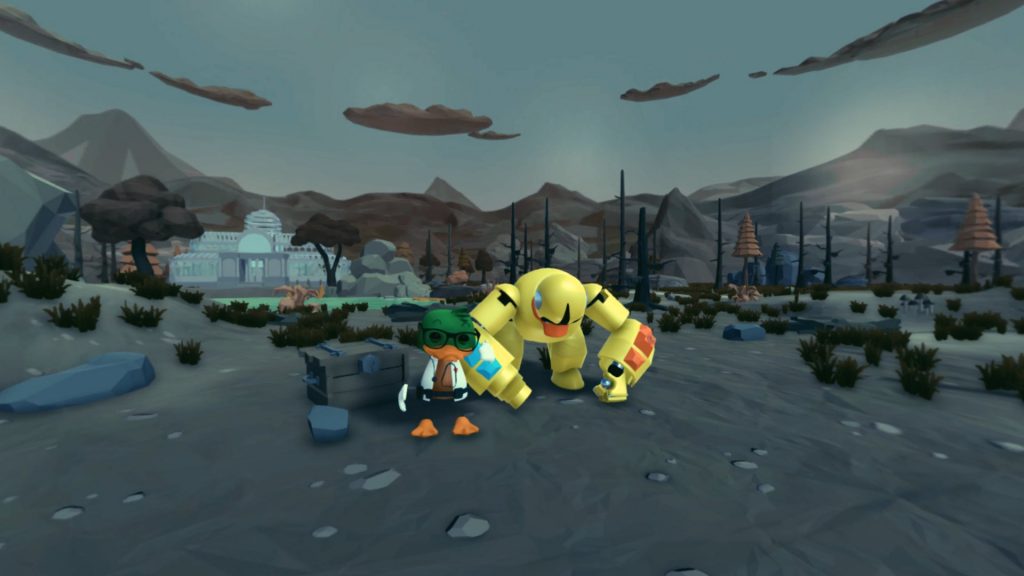
- Needles That Make Me LaughA hospital initiative by Hospital Niño Jesús in Madrid aimed at reducing anxiety and fear in children undergoing medical procedures. A Virtual Reality game featuring the character Doctor Cuac was developed, also materialized as a physical mascot to accompany children during their hospital stays.
- Sacyr Challenges: An innovation program focused on workplace safety risk prevention, organized by Sacyr and the consulting firm Opinno. The Virtual Reality experience replicates realistic construction sector scenarios, allowing workers to practice preventative actions to improve workplace safety.