

La industria de la realidad extendida (XR) Spain is currently at a critical stage of its development. InmersivaAsociación de Realidad Extendida de España (AREX) has released its annual report for 2024, offering a detailed and current overview of the XR sector. The report, based on a thorough analysis of trends, innovations, and challenges, provides key insights into market growth, primary XR applications, and future outlooks.
This report provides a focused analysis of how virtual reality (VR), augmented reality (AR), and mixed reality (MR) technologies are reshaping sectors such as education, healthcare, and entertainment. It serves as a critical resource for understanding the current and future landscape of the XR industry within Spain.
This article will explore the key findings of the report, including the impact of recent technological advancements, current business opportunities, and future outlooks.
Panorama de la Industria XR
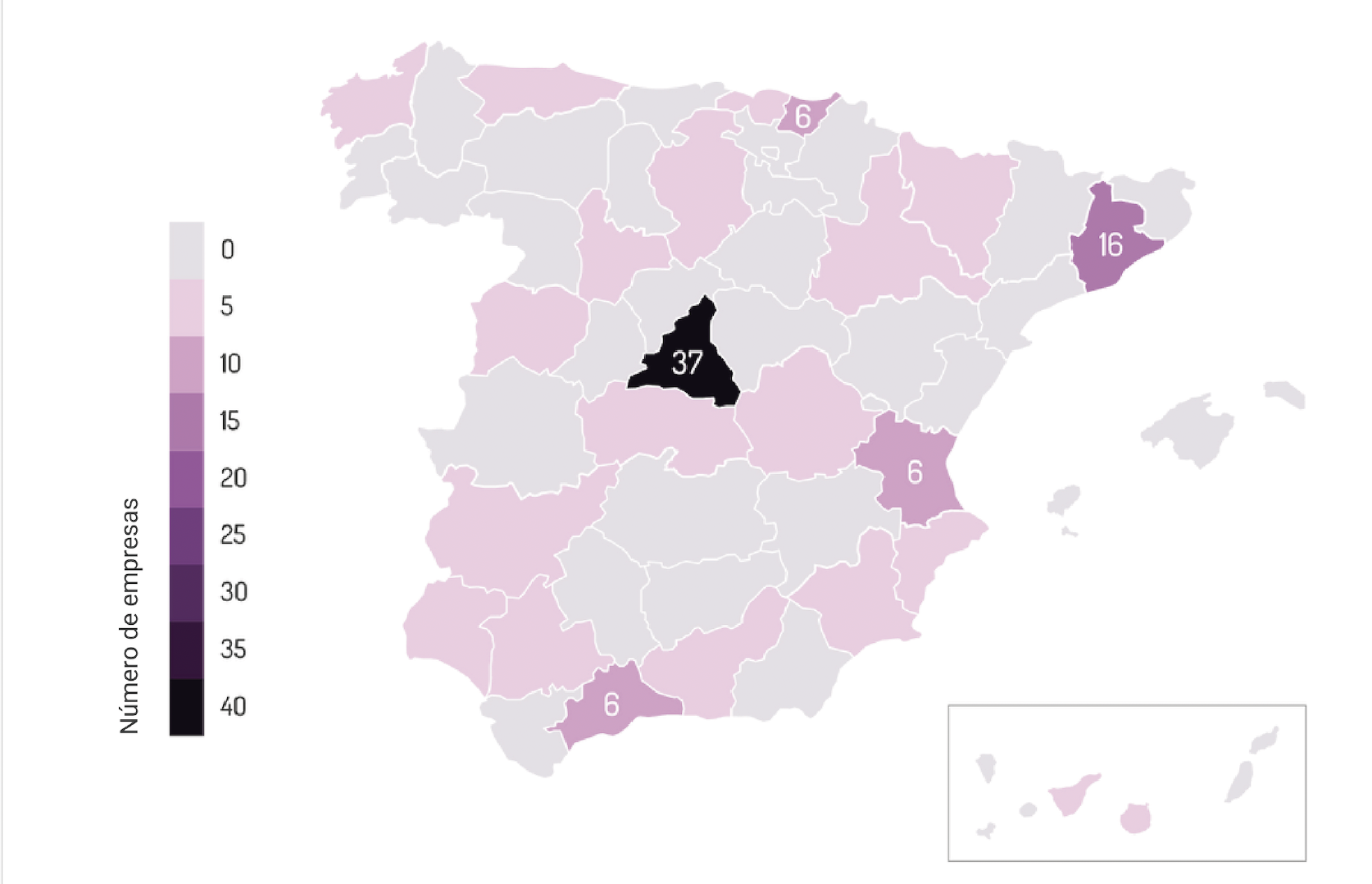
- Most XR companies are located in Madrid (37) or Barcelona (16), with Guipúzcoa (6), Málaga (6), and Valencia (6) also representing significant concentrations.
- 2017 and 2020 represented the years with the highest number of newly created XR companies.
Perfil de las Empresas XR
- Spanish XR companies have an average age of 7 years and typically employ teams of under 10 people.
- Approximately one-third (3 out of 10) of professionals working in Spanish XR companies are women.
- Most companies are multidisciplinary, integrating XR with other technologies such as Artificial Intelligence (AI).
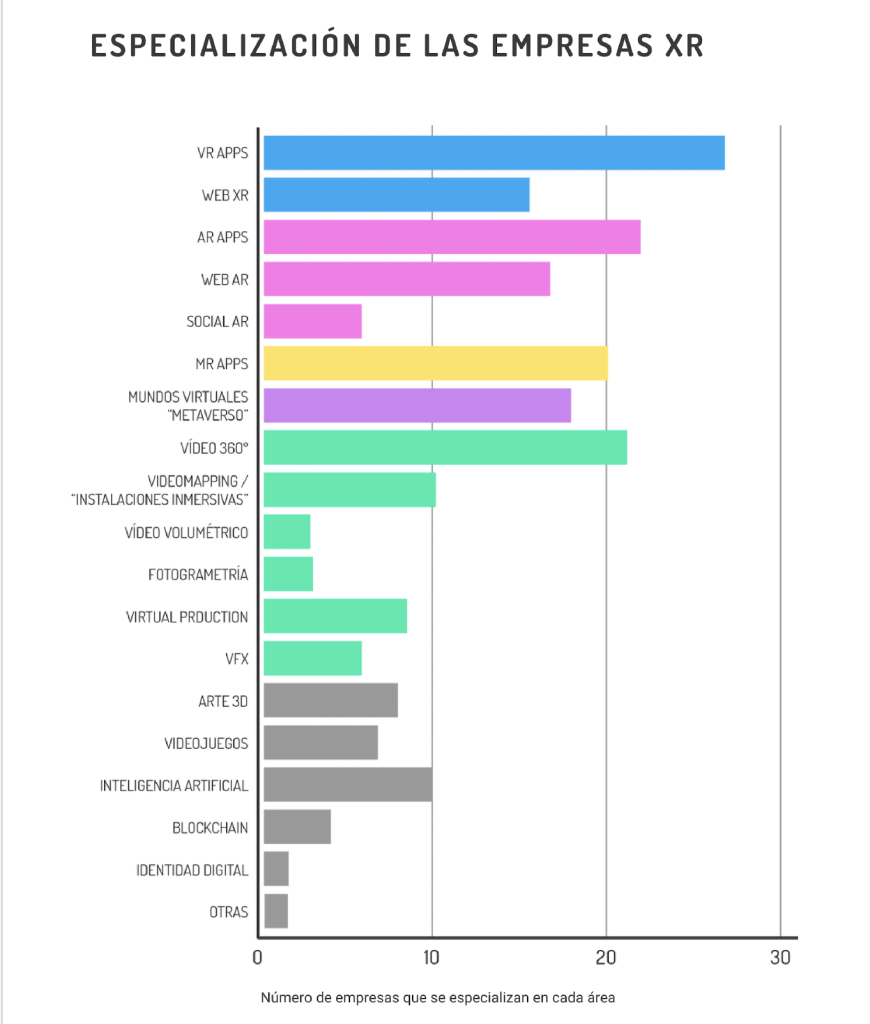
- Regarding specialization, the development of Virtual Reality (VR) applications is the most prominent area, followed by Augmented Reality (AR) applications, 360° video, Mixed Reality (MR) applications, virtual worlds for the metaverse, and XR/AR websites.
Perfiles Profesionales
- A diverse range of profiles are observed within XR companies, with the majority employing professionals in 3D Art and Development.
- Las empresas XR tienen previsto contratar durante 2024 perfiles de Desarrollo, Programación, Arte 3D y Comercial.
Análisis del Mercado
- 80.6% of XR companies target business clients (B2B).
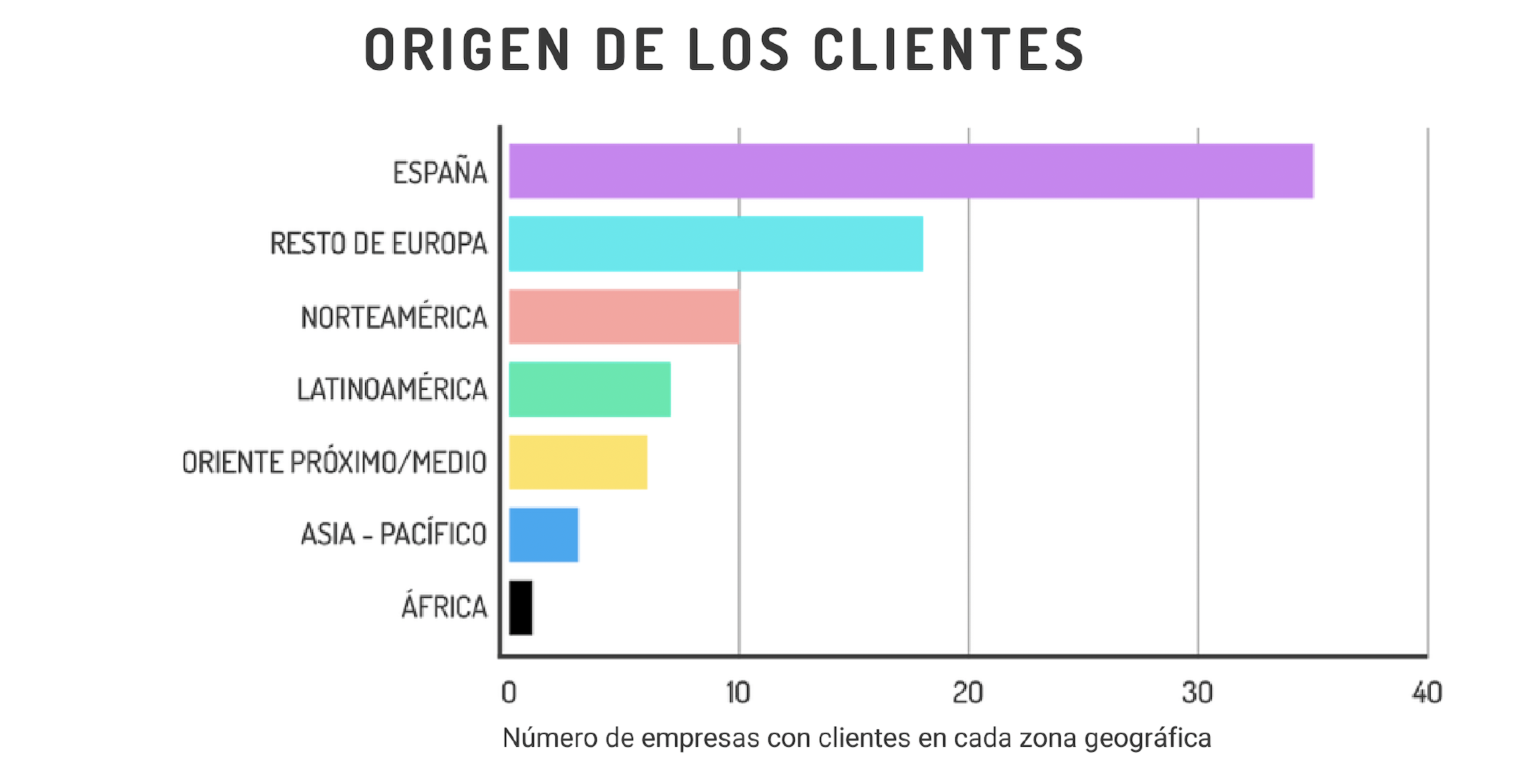
- The market is primarily domestic, with the majority of its customers located in Spain, followed by the rest of Europe (United Kingdom, Germany, France, and Italy).
- The sectors with the highest number of projects are Marketing, Audiovisual, and Education.
- Regarding Research and Development (R&D) projects, the sectors with the most significant growth are Industry, Marketing, and Conventions/Events.
- Most companies develop between 10 and 20 projects annually.
- In 2023, demand for projects increased, and 89% of companies anticipate a rise in their revenue this 2024 (currently averaging between €100,000 and €250,000).
- Regarding revenue by technology, 28% originates from Virtual Reality projects, 23% from Augmented Reality, 19% from audiovisual projects, 13% from mixed reality, 12% from the metaverse, and 3% from other technologies.
Funding
- Despite an increase in grant availability, 64% of companies continue to find it difficult to locate specific XR-focused funding opportunities.
- Key funding bodies include the Ministry of Culture, the Ministry of Economy, and the Autonomous Communities.
- Only 8% of XR companies currently receive European funding.
- 75% of XR companies have not secured private funding.
Trends and Community
- The launch of the Apple Vision Pro has only impacted 22% of Spanish companies, while Artificial Intelligence has been significantly relevant to 83% of these companies due to high client demand.
- For 83% of the surveyed XR companies, attending industry events is beneficial due to the increased visibility and business opportunities they generate.
- 89% of surveyed Spanish XR companies are interested in internationalizing their businesses.