
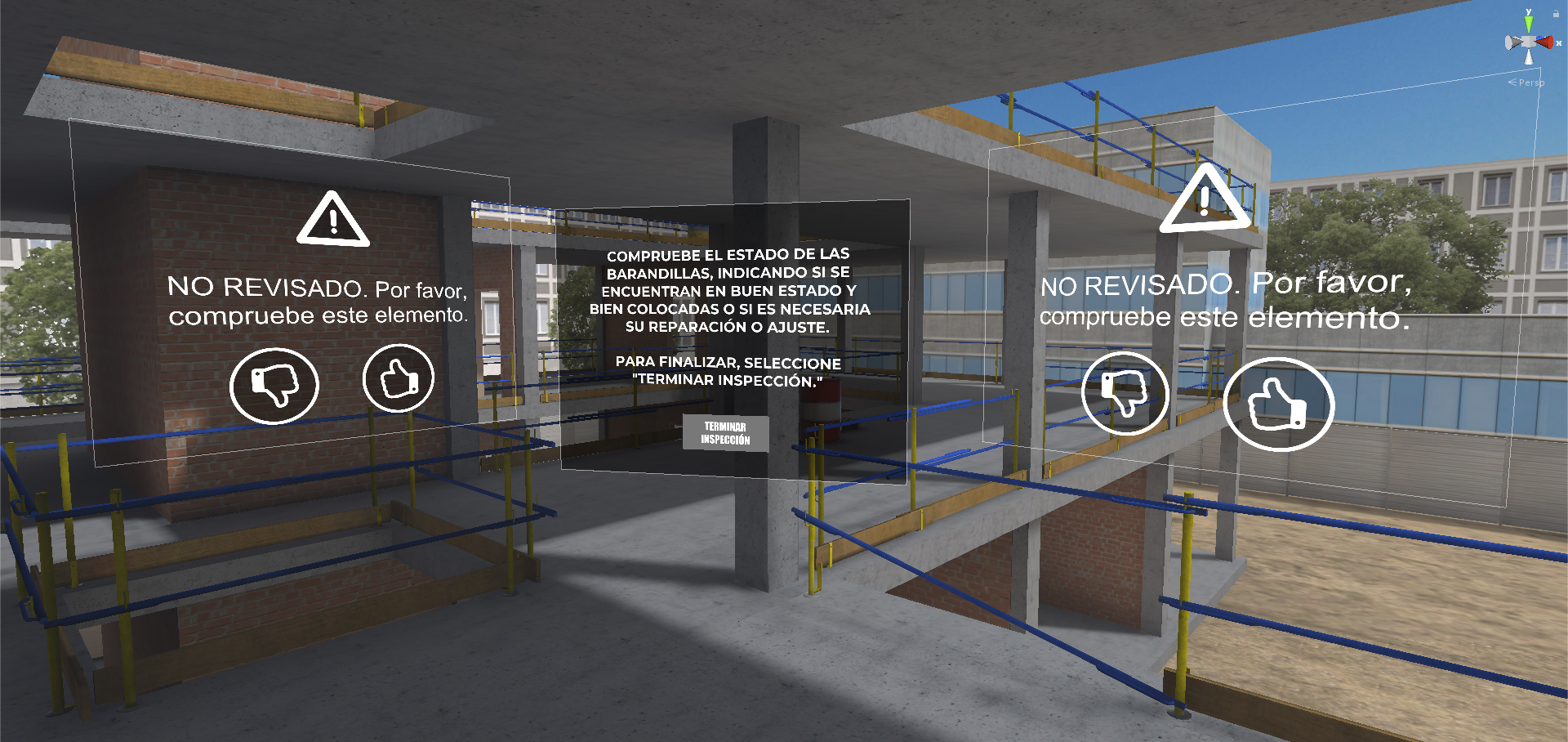
Virtual reality provides a wide range of useful tools to contribute to training and improvements in the work environment of professionals, particularly in the field of occupational risk prevention.
Numerous jobs involve operatives facing dangerous situations daily, typically focused on specific tasks within industries such as manufacturing, transportation, architecture, and energy, where even a minor error can cause serious injuries.
Traditionally, preventative training has relied on traditional resources such as manuals, videos, and practical cases. However, thanks to virtual reality, it is now possible to learn and practice knowledge in a more realistic, effective, rapid, and engaging way.
Through virtual reality headsets or goggles, which can be supported by other devices such as controllers or gloves, the user can interact with the virtual environment in various ways and obtain sensory stimuli that intensify immersion, recreating the experience they would face in real life.
The primary objective of occupational risk prevention is to train workers to avoid accidents and dangerous situations in their work areas, adopting good practice in their daily performance and applying appropriate procedures.
With virtual reality, workers solve tasks in a more intuitive way, also quickly assimilating the need to comply with labor regulations.
Users experience firsthand scenarios in which they must avoid risks or react to them, but unlike traditional training, this is done in a completely safe environment. This simulates emergency situations and responds to protocols of action without exposing people to danger. This ensures the physical protection of people, materials, equipment, or facilities, which also represents a significant cost and insurance savings for companies.
The exercise can be carried out as a tutorial, showing how to act in each situation, or in an evaluative way, testing the knowledge of workers. This type of learning, in which the user is the protagonist, allows experiences to be better retained, becoming a lasting memory due to their playful component.
The effectiveness of this methodology is achieved through the immersive experience that projects the idea of being faced with real emergency situations into our brains. Students or workers live firsthand the dangers and consequences of the decisions they make, so they must put all their effort into acting and facing the risk appropriately.
Advantages of Virtual Reality in Occupational Risk Prevention
The utilization of virtual reality in occupational risk prevention generates benefits not only for employees or students, but also for the company or training center itself:
- Cost Savings: Virtual reality implementation eliminates capital investment in physical equipment and the need for travel, benefiting both students, employees, and trainers.
- Reduced Interference: Immersive virtual training does not disrupt the work of other employees or the operation of equipment, thereby safeguarding business activity.
- Training Optimization: Users can repeatedly practice exercises as needed, accessing content and re-experiencing scenarios for targeted repetition.
- Increased Motivation: Leveraging engaging technology and gamification elements fosters greater interest and motivation, contributing to a stronger corporate culture.
- Enhanced Participation and Engagement: Simultaneous access to content by multiple users generates synergy and collaboration, leading to increased employee involvement.