
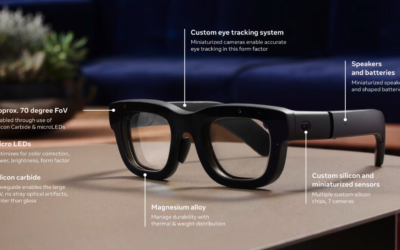
Meta continues to heavily invest in immersive technology, as demonstrated by the recent unveiling of Orion, its new augmented reality headset model. These headsets aim to seamlessly integrate the physical and digital worlds in a more intuitive and natural way, and are considered one of the most anticipated launches of 2024. This article reviews the key technical features of the Meta Orion and compares them with other market competitors, highlighting how they have achieved lighter and more comfortable designs than alternatives such as the Apple Vision Pro.
Technical Specifications
Meta has integrated several improvements into Orion that stand out in both its technical aspects and design. These are the most relevant features:
- Display and Display Technology
The Meta device incorporates a high-resolution microLED display, one of the most advanced technologies in augmented reality devices, allowing projected images to appear with greater sharpness and vibrant colors, enhancing the user's immersion.
Furthermore, it includes an expanded field of view compared to its predecessors, providing a more immersive experience without sacrificing visual quality at the edges.
- Advanced Processor
Orion features a next-generation processor developed by Qualcomm. This chip is optimized to handle the graphical demands of augmented reality and efficiently process data. The result is a fluid experience, even when running complex real-time applications.
- Eye and Hand Tracking
One of the most notable innovations in Meta Orion is its eye-tracking technology, which allows the user's eye movements to be detected with unprecedented accuracy. This feature not only improves interaction but also helps optimize graphical performance by rendering details only in the areas the user is looking at.
Furthermore, Meta has improved hand tracking through a wrist-worn band that the user wears, enabling natural interaction without physical controllers. This offers a more intuitive and comfortable interface, as hands become the primary tools for navigating menus and applications.
- Connectivity and Synchronization
Thanks to its integration with the Meta ecosystem, Orion seamlessly synchronizes with mobile devices and social media platforms such as Instagram and Facebook, facilitating the creation and sharing of augmented reality content. It also incorporates support for Wi-Fi 6 and Bluetooth 5.3, ensuring fast and stable connectivity for streaming and calls.
- Battery Life
One of the key challenges of augmented reality has been battery autonomy, and Meta has made significant advances in this area with Orion. The headsets promise up to 6 hours of continuous use, a significant increase compared to previous models and competitors, providing greater flexibility for daily use.
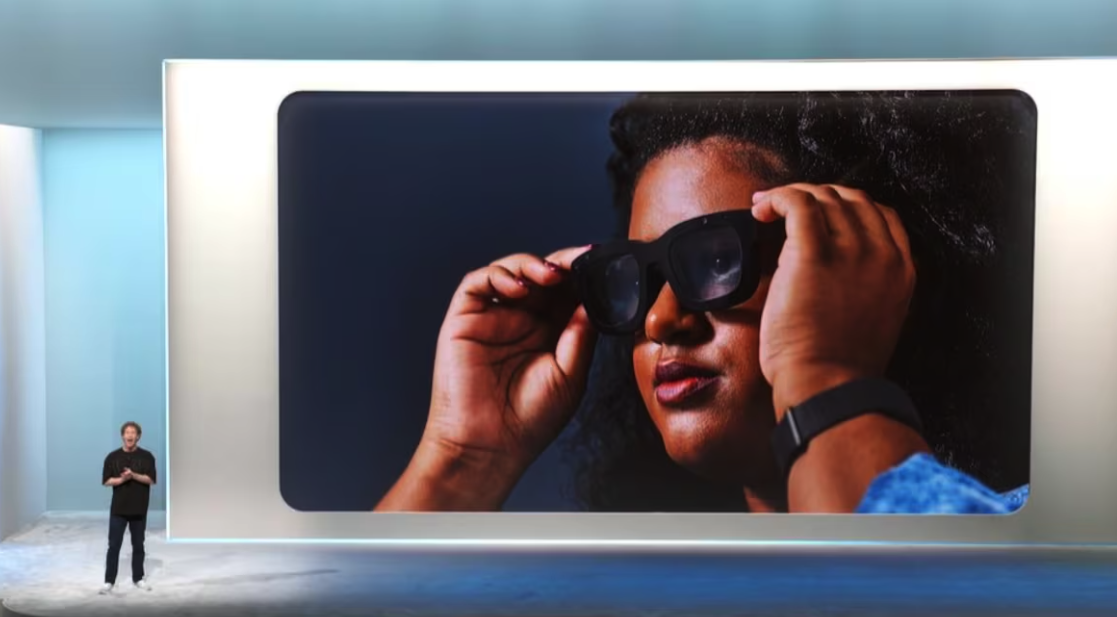
Meta Orion vs. Apple Vision Pro: Focused on Lightness and Comfort
A recurring criticism of devices like the Apple Vision Pro has been their size and weight, as while they offer impressive AR/VR experiences, they are impractical for extended use due to their bulk. Meta is aiming to differentiate itself with the Orion.
Meta has focused on significantly reducing the weight of the Orion glasses. Unlike the Apple Vision Pro, which are robust and somewhat heavy due to the extensive technology integrated into the device, the Orion have been designed with a priority on lightness and comfort. Meta has utilized lighter materials such as magnesium alloys and high-performance plastics, making them ideal for daily use without causing user fatigue.
This slimmer, lighter design is crucial for enabling users to wear them for extended periods without discomfort, an area where Apple continues to face criticism.
While the Apple Vision Pro is positioned as a hybrid device, designed to offer both augmented and virtual reality experiences, the Orion primarily focus on augmented reality. This allows them to simplify certain components, reducing both weight and energy consumption, reinforcing their focus on a more specialized and comfortable AR experience.
A potential turning point in the development of immersive devices?
Initially, the Orion appear to represent a step forward in the evolution of AR glasses. With significant technical improvements and a clear focus on lightness and comfort, Meta has created a device that not only offers an immersive and high-quality experience but also feels more natural and practical for daily use.
Unlike the Apple Vision Pro, which are distinguished by their ability to merge AR and VR, Meta has opted to simplify the experience and focus on making it more accessible. This positions the Orion as a preferred option for those seeking a comfortable device without sacrificing power or functionality.
We are currently discussing a prototype without a confirmed launch date, so there is likely a long road ahead before the Orion are available to the public. However, Meta has taken its first step in the race to achieve definitive glasses, which will not be significantly different from current sunglasses. The question remains: when will this moment arrive and how will the final public receive it?