
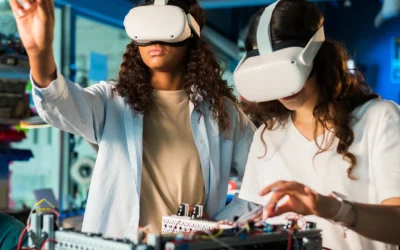
The implementation of immersive technologies, such as virtual reality (VR) and augmented reality (AR), is transforming the industrial sector by optimizing production processes, reducing costs, and improving employee training processes.
Benefits of immersive technology in industry:
- Cost reduction in prototyping: Virtual reality enables companies to create and evaluate prototypes in digital environments before physical production, minimizing errors and unnecessary expenses. For example, BMW utilizes VR to test vehicle interior designs before manufacturing.
- Improved training and safety: Immersive experiences offer more effective and secure training. According to a PWC study, individuals who learn through VR assimilate content four times faster and with a 275% increase in confidence when applying it, compared to traditional methods. Companies such as Scania and Bayer already employ these technologies in the training of their employees.
- Process and design optimization: Augmented reality facilitates the overlay of digital information onto the physical environment, improving precision in complex tasks and enabling real-time adjustments during design and production.
Case Studies
The use of immersive technology has proven beneficial in its implementation across various international companies, optimizing their workflows and improving operational efficiency:
- Volvo: The Swedish company Volvo has incorporated mixed reality into its vehicle design process. This technology combines elements of VR and AR, allowing engineers and designers to visualize and modify prototypes in a virtual environment before physical production. This methodology has accelerated the development of new models and significantly reduced the costs associated with creating physical prototypes.
- Walmart: The American retail chain Walmart has adopted virtual reality for employee training. In 2019, the company invested in over 17,000 VR headsets to train its staff in areas such as customer service, regulatory compliance, and new logistical procedures. This initiative has resulted in a 70% reduction in training errors and a 40% increase in employee job satisfaction.
-
United Parcel Service (UPS): The logistics and delivery company UPS has incorporated virtual reality into the training of its drivers. Through immersive simulations, employees can practice maneuvers and safety procedures in a controlled environment before facing real-world situations on the road. This methodology has improved driver preparedness and contributed to reducing incidents during deliveries.
-
Iberdrola: The energy company Iberdrola has adopted technologies such as virtual reality, drones, and artificial intelligence to optimize its operations. During its Innovation Week in November 2024, the use of virtual reality for training on wind turbines was highlighted, allowing technicians to practice in simulated environments before performing tasks in the field. This initiative has improved efficiency and safety in its operational processes.
These examples demonstrate how the adoption of immersive technologies can positively transform internal business processes, enhancing both employee and customer efficiency and satisfaction.
The adoption of immersive technologies within the industry not only improves efficiency and reduces costs, but also positions companies at the forefront of innovation, preparing them for future challenges.